
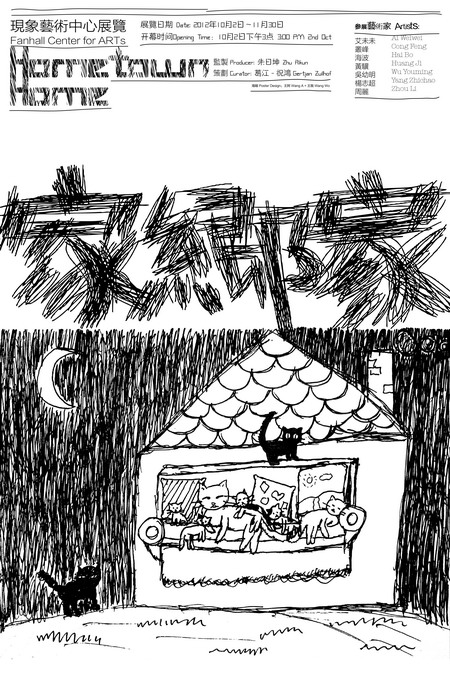
展览名称:《家乡 • 家》
策 展 人:Gertjan (葛江)
监 制:朱日坤
参展艺术家:艾未未、杨志超、海波、丛峰 、黄骥 、吴幼明、周丽
开幕时间:10月2日下午三点
展览地点:北京宋庄现象艺术中心
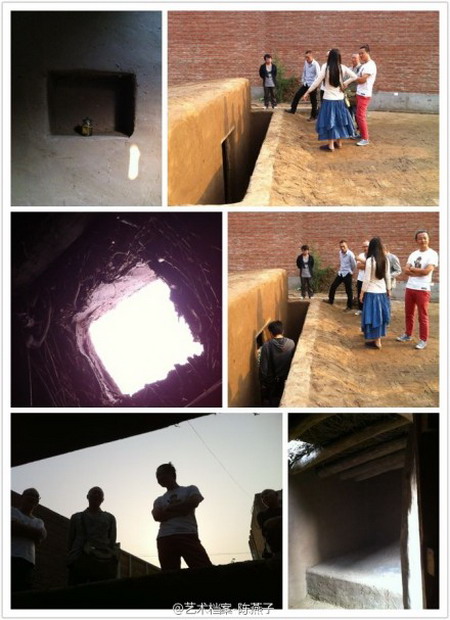
@艺术档案-陈燕子 :现象艺术中心《家乡 • 家》展,参展艺术家之一艾未未装置作品《地窝子》。
艾未未:“有很多年的时间,这个地窝子曾经在最严峻的境地保护了我和我的家人。它包含了很多有关生活与社会的记忆。在里面的生活模式是最简单和原始的,因为我们也没有别的选择....如果要细述那个时期的生活,实在是一个长篇的故事。我希望在宋庄的“地窝子”能够成为一个可以生活的空间....
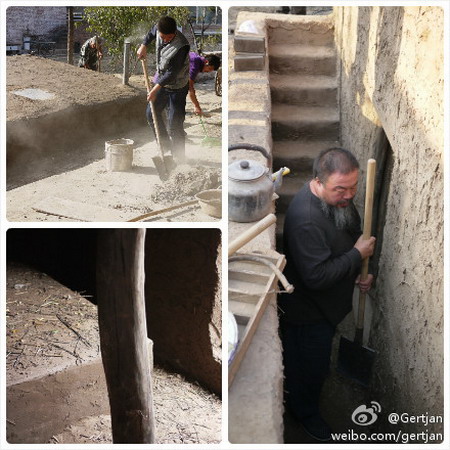
@Gertjan:#家乡,家#7位艺术家之7:艾未未在现象的院子,重盖了童年时期和家人住过的地窝子。Ai Weiwei came home today. For the Hometown Home Exhibition in fanHall, Songzhuang, he reconstructed the underground shelter he lived in when his father was sent to Xinjiang. October 2, 3PM.
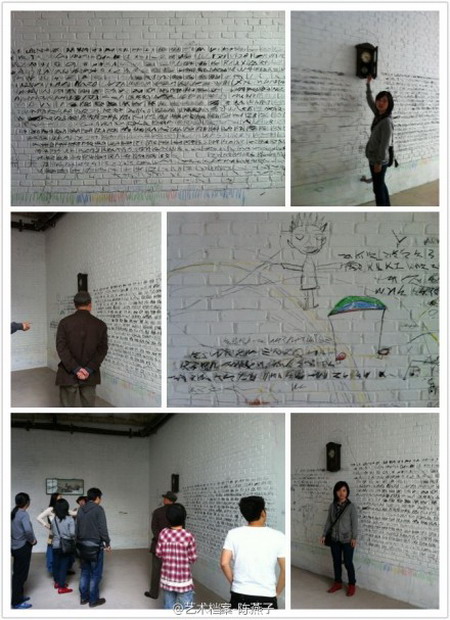
@艺术档案-陈燕子 :现象艺术中心 《家乡 • 家》展,参展艺术家之一周丽墙上绘画、装置作品《傍晚六点钟》,看不懂的文字,陈旧的匾,不再摇摆的钟。。。“重现她童年涂鸦的小巷,在墙上画上想象中的妖怪,下午6点的钟声一响起,恐惧忽然降临。。。”
周丽:童年时我喜欢在走廊的墙上画着妖精和鬼怪,想象着他们的神通与广大。自己还创造了一些字,不知疲惫的写着……傍晚六点的钟声响了,一下,两下,三下……六下,钟声催促着,如果不马上进屋上床,恐惧就会将我带走。
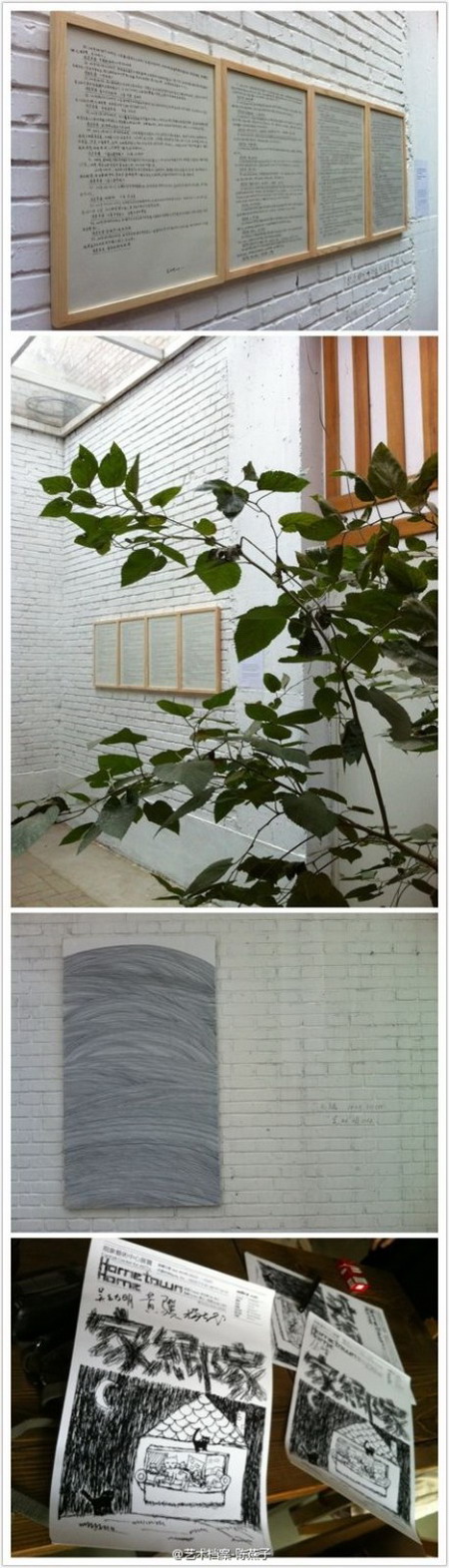
@艺术档案-陈燕子 :现象艺术中心《家乡 • 家》展,参展艺术家之一吴幼明绘画作品《无题》。近十年来,吴幼明把媒体和网络看到的强拆及拆迁自焚事件手抄下来,并在画布上一道道一笔笔画细线,时间随着笔尖慢慢逝去,自己也在画面安顿身心。“我们不仅是在文化上无家可归,我们连身体都已经无家可归”。
吴幼明:从2003年开始,我不断的在媒体和网络上看到有关强拆和被拆者自焚的新闻。这种消息一次又一次的刺痛我。我决定将这些事件记录下来。我们不仅是在文化上无家可归,我们连身体都已经无家可归……我在画布上用笔画出一道道的细线....时间静静的走过,生命就这样消磨,我在画布上安顿身心。
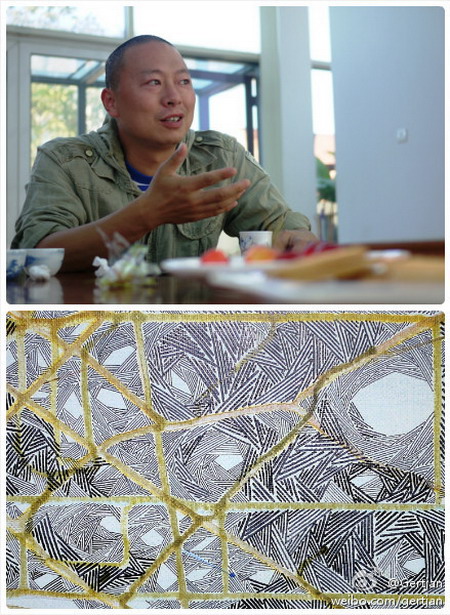
@Gertjan #家乡,家#7位艺术家之6:吴幼明 "我们不仅是文化上无家可归,我们连身体都已经无家可归……"Wu Youming is an artist who is concerned about the fate of people. This translates into writings, but also in paintings with fine strokes. Hometown Home Exhibition. October 2, 3PM.
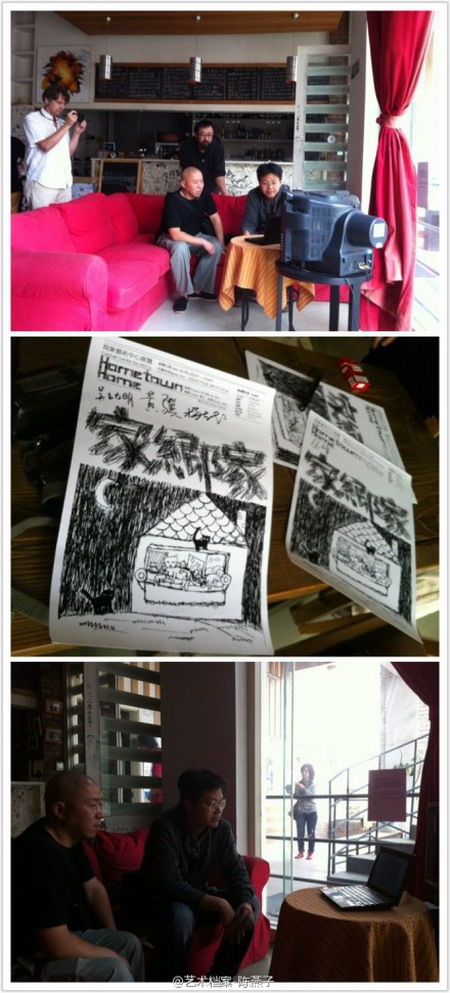
@艺术档案-陈燕子 :现象艺术中心《家乡 • 家》展,参展艺术家之一杨志超影像作品「半夜鸡叫」,因被拉闸,只能借助笔记本观看。。。因此我的微博也就只能直播现场可以展出的3位艺术家作品(绘画、装置)。刚好杨志超在现场,他用笔记本让我们看完他作品。。。 因被拉闸,现象的《家乡·家》展有四位艺术家,杨志超、丛峰、黄骥、海波的影像作品无法正常播出。
杨志超:《半夜鸡叫》是我收藏的一部幻灯片。对于六七十年代出生的人来说,这部动画片是那个时代的集体记忆。“周扒皮”作为经典坏人的典型,曾经是孩子们模仿和谈论的“明星”。高度意识形态化的红色教育使“半夜鸡叫”成了当时中国教化儿童的范本。而这样的教化是可怕的....
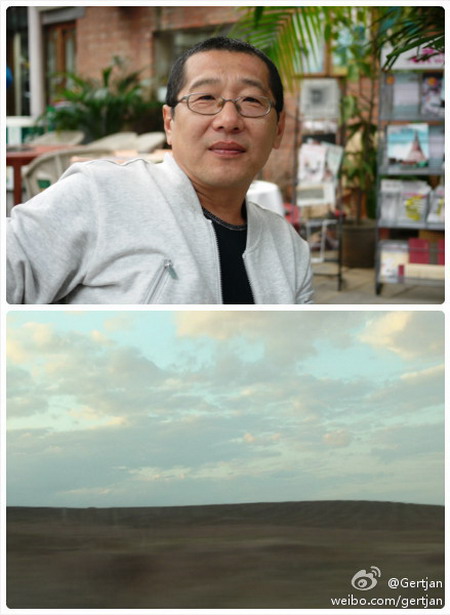
@Gertjan : #家乡,家#7个艺术家之二:摄影家海波从不认为自己是个导演,但是这次展览他给我们带来新的短片《回家》。Hai Bo, the great photographer would not call himself a filmmaker, but in the Hometown Home Exhibition he will present a fine new one called Back Home.
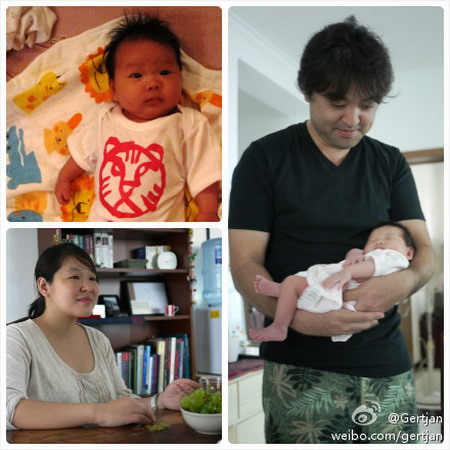
@Gertjan :#家乡,家#7位艺术家之四:导演黄骥为了给女儿办中国户口,和日本丈夫回到湖南,正好遇到钓鱼岛事件。Mother filmmaker Huang Ji went with her Japanese husband to her hometown for the Hukou of the little one and made a home movie in between. See it in the Hometown Home Exhibition.
黃驥:《痕跡》介紹:为了给刚出生的女儿上中国户口,我和日本丈夫带她从北京回到了湖南老家,正是中日钓鱼岛纷争之际....对我来说,这一段旅程是一辈子都没法遗忘的痕迹。
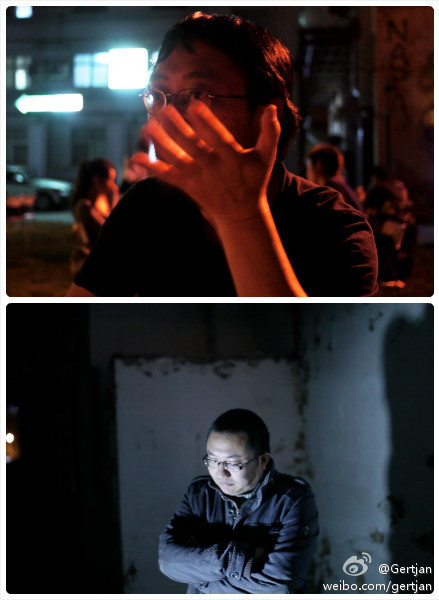
@Gertjan : #家乡,家#7位艺术家之三:纪录片导演丛峰的新长片《地层1:来客》,两个男人在夜晚讲述他们的家乡。Documentary maker Cong Feng made an Art Movie with men talking in the dark about their home town, "Stratum 1: The Visitors", premiere October 2, 3pm Hometown Home Exhibition.
家乡家
一个无预算的独立的现象展览
葛江-祝鸿Gertjan Zuilhof
我是一个外来人,最多算一个远远的观察者。我对中国了解不多,也无法阅读或说中文。我是一个电影节策划人,也曾经策划过一些展览。在有空特别是在午夜的时候,我画一些奇怪的画。但我并不把这些画太当回事。去年我曾在现象艺术中心办过一个叫做“一百张送人的画”的展览,在展览开幕三四个钟头(等于开幕和闭幕在同一时候)后把一百张我的画送给来看展览的人。现象希望我再做一次这样的活动;不过我想这样的展览更应该是爱好而不应该重复。于是我建议策划一个展览来代替。我明白现象没有什么真正的预算来做这个展览(我想现象还是会需要花一点钱),不过我觉得这是一个很有挑战的事,同时也很适合同样是致力于低成本电影创作的现象机构。
我在宋庄呆了不少一些时间并逐渐喜欢这里。我在这里完成了一个跟非洲电影导演有关的项目,这个过程中现象给了我很多帮助(因此我也乐意做点事情作为回报)。在这个过程中我注意到了一些你们应该早已经熟悉的东西。来参与项目的中国电影人过些时间离开,总是说回家乡去。我过去以为中国人只是在春节期间回家的印象因而被改变了。有的人经常回老家去;或者在那里呆很长时间,也许他们依然就住在家乡。我还注意到,每一个我在宋庄认识的人,他们都很清楚他们来自哪个省份。他们并没有被看做是北京人或者宋庄人,而依然被认为是某个外省人。他们的家也许是已经在宋庄,但那并不是故乡的家。
因此考虑选题的时候,我选择了这个对许多人来说非常普通和容易理解的主题;而且我考虑的艺术家并不是住在宋庄,而是可能分布更广。
一个展览最花钱的地方常是差旅和运输。曾经我在邀请台湾的蔡明亮来鹿特丹做过一个展览,结果他从马来西亚运来50把电影院的老座椅。为了避免这种成本,我寻找离现象不远的电影人和艺术家。
事实上这确实可行。这些艺术家和电影人中,有些生活和创作的地方离现象走路也就几分钟的时间。他们在独立观念跟现象也非常的接近。我和他们都是在现象见过一次面甚至多次。故此这个展览也无需提供机票和住宿。创作方面,艺术家也可以自由的决定如何用经济或者昂贵的方式来完成作品。他们都知道没有预算。所以这种展览你不能到处轻易就去组织,也无法经常尝试。
我还是跟自己找了个难题,我坚持这个展览必须有一件作品是可以长期保留的。艾未未说他可以在现象的院子里做一个地下室。这个像一个窝坑的地下室在当年他还是孩子的时候跟被遣送到偏远省份的家人一起住过。也许这不仅是个窝棚的艺术作品,而更是一个可以实际生活的房屋。因此我建议这个作品在展览后长期保留。我曾经问艾未未是否愿意在这个房子里住一些时间。他喜欢这个提议。不过最终他是否会真住,还得看他后面的表现。
我还邀请的这几个参加展览的艺术家和电影人都是差异很大的。除了著名艺术家如艾未未,还有重要的行为艺术家杨志超,和重要的摄影师海波。许多很棒的艺术家离现象特别近,这足够组织更多的展览。
现象也是学习独立电影的学生和年轻独立电影人的基地,理所当然这个展览也需要年轻电影人参与其中。丛峰,观察式纪录片的重要作者;黄骥,去年最引人瞩目的独立剧情影片之一的导演:他们代表了新一代的电影创作者。
周丽和吴幼明这对夫妇是年轻的艺术家。我本来请他们合作一个作品。但是也许因为家乡的家的差异的原因,他们最终每人完成一个不同的作品。
这个展览跟通常的美术馆和画廊的展览不同。艺术家可以使用现象的整个场地;但是使用时,还是得不妨碍这个场所日常的功能。比如现象咖啡厅虽然也展出作品,但是依然按照对顾客开放。
我提议了主题和艺术家。但是具体的工作是由我的朋友朱日坤来完成的。
(翻译:朱日坤)
Hometown Home
An independent no budget exhibition in fanHall.
Gertjan Zuilhof
I am an outsider. A distant observer at best. I do not know too much about China and do not read or speak the language. I am a film festival programmer and curated some exhibitions before. In my spare time, mostly around midnight, I make sometimes strange drawings. Nothing serious. Last year I showed a hundred of them in fanHall and gave them away to the visitors of the opening (that was the closing at the same time). I was asked to do such an event again, but thought that was too much honor for something that should stay a hobby. I proposed to curate an exhibition instead. I was aware that there was no real budget for that (although I guess fanHall will lose money on this), but that I saw as a challenge and fitting for a venue that devotes itself to low budget filmmaking.
I spent quite some time in Songzhuang and came to like it. I did a project with young African filmmakers for which fanHall helped me a lot (so I am happy to do something in return). During my stay I noticed something that you will all know already. Every now and then people from the group of helping filmmakers left for sometimes weeks. Back to their hometown it was explained. So my idea that the Chinese only go back to their hometown once a year with Chinese New Year was changed. Some go very often and for sometimes quite long periods. Somehow they still live there. I also noticed that of all the people I got to know in Songzhuang everybody knew from which province they were. They were not seen as from Beijing or Songzhuang; they were all still inhabitants of some other province. Their home might be in Songzhuang, but not there hometown home.
So when I had to come up with a theme for the exhibition I chose the most common and most obvious of all and I also was sure that non would refer to Songzhuang, but to as many places as artists involved.
What can make an exhibition expensive is travel and shipping costs of unique materials. I once made an exhibition in Rotterdam for which I invited Tsai Ming-Liang who had to come from Taiwan and the work contained 50 old cinema chairs that had to come from Malaysia. To avoid this kind of costs I asked filmmakers and artists that were close to fanHall.
Close in practical distance. Some live and work only a few minutes walking away from fanHall. And close to the independent idea of fanHall. All of them I have met at one or the other occasion in the building. So no costs for flight tickets and hotel nights and it was up to the artists to make a cheap or expensive work. They knew that they would not be reimbursed. This is a way of exhibition making you can not do everywhere and maybe also you can not do it too often.
To contradict myself I point out that the exhibition will contain at least one work that will be hard to move afterwards. Ai Weiwei proposed to make an underground house in the yard. A hole in the ground he said where he lived as a kid when his father was sent to live in a far away province. Maybe more a house than a hole it is an art work you can actually live in and I suppose it wil stay after the exhibition. I asked Ai Weiwei if he would live in the house for a while. He liked the idea, but maybe not totally up to him to actually do it.
I asked very different artists and filmmakers for the exhibition. Established artist like Ai Weiwei and also the great performance artist Yang Zhichao and the great photographer Hai Bo. Good so many great artists live near to fanHall. Enough for many more exhibitions.
FanHall is a place for students in independent film so also younger people had to be involved and also filmmakers. Cong Feng, maker of strong observational documentaries and Huang Ji, who made one of the most remarkable independent fiction films of the last year, are representing the younger generation of filmmakers.
The artist couple Zhou Li and Wu Youming are younger artists. I asked them together, but as it goes with hometowns, each has its own one and they decided to make separate works.
The exhibition will not be like or look like the usual museum or gallery exhibition. The whole building will be used, but it will stay normally in use. The fanHall cafe will contain works but will also be open to visitors.
I proposed the theme and the artists, but the real work is done by my friend Zhu Rikun.